
History and fundamentals of Ashihara Kaikan sport
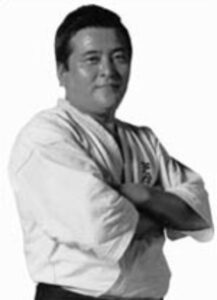
Ashihara Kaiikan is an original, direct (full contact) Japanese martial art founded by Kancho Hideyuki Ashihara (05.12.1944 – 24.04.1995). The official name of the organisation that brings together the representatives of this art is 'N.I.K.O.' - Ashihara Kaikan. Today, the legacy of his father has been inherited and is successfully led by Kancho Hidenori Ashihara, with its headquarters in Matsuyama, Japan. The essence of this martial art is known as the Sabaki Method, which involves positioning the fighter to the side or behind the opponent, thereby securing the most advantageous position for manipulating the opponent's balance and facilitating a simultaneous counter-attack. Built upon this movement, derived from the fundamental tenets of martial arts, are two sports and skills: Kyokushin Kai and Karate, as well as original techniques devised by the style's founder. Hand and foot Kyokushin-kai strikes make up approximately 40 per cent of this fighting style, while throws, sweeps and takedowns from Karate account for 10 per cent. When many original techniques, accounting for 50%, developed by Hideyuki Ashihara himself, are added to this, the result is a completely indigenous and original art and sport – 'Ashihara'. It was the founder's brilliant idea, having recognised the potential to improve the two aforementioned styles by synthesising them, that established a powerful, dynamic, and highly attractive martial art under Full Contact rules, one that captivates at first sight. Due to the shortcomings of full-contact rules in Karate, he adopted the full-contact rules from Kyokushin, and because of the beauty and applicability of the techniques of throwing, sweeping, takedowns and, ultimately, scoring, he adopted this segment of the sporting rules from Karate. By adding his own authentic techniques, implemented through the sport's rules, an opportunity arose to establish a completely new and authentic sport.
Disciplines in Ashihara Kaikan sport
What distinguishes Ashihara from Karate and Kyokushinkai, and what is a fundamental condition for obtaining the status of an authentic sport, are the sport rules that Ashihara athletes follow in competitions within four disciplines:
1. Combat sport for seniors, involving full-contact strikes with the hands to the torso and with the legs to the body and head, without direct hand strikes to the head. It includes the possibility of throws, sweeps, pulls, and takedowns, as well as non-contact scoring techniques used to earn sports points. A competitor who has been thrown or taken down has the possibility to respond with a full-contact kicking technique to the head. Protective equipment includes mouthguards and groin protectors.
2. Combat sport for children, young children (pupils), cadets, juniors, and youth categories, involving full-contact strikes with the hands to the torso and with the legs to the body, with restricted kicking to the head performed on a scoring basis. It includes throws, sweeps, pulls, and takedowns, as well as non-contact scoring techniques used to earn sports points. A competitor who has been thrown or taken down has the opportunity to respond with a scoring kick to the head. Knee strikes to the head are prohibited. This discipline is practiced with full protective equipment, including a helmet with face protection, chest protectors, open-finger gloves, groin protectors, shin guards, and instep (foot) protectors.
3. Combat sport for seniors and veterans, involving full-contact strikes with the hands and legs to the body and head, with the possibility of throws, sweeps, pulls, takedowns, and non-contact scoring techniques used to earn sports points. A competitor who has been thrown or taken down has the opportunity to respond with a full-contact kicking technique to the head. Full-face protective headgear (“space helmet”), open-finger gloves, and groin protection are used. The basic rule is that only three consecutive hand strikes to the opponent’s head are allowed, after which a hand strike to the body or a kick to the body or head must follow in order for the striking combination to continue.
4. Competition in Kata in individual and team categories. Kata are performed by athletes individually, and then the same Kata is demonstrated with an attacker. Team competition is conducted in synchronized Kata. What particularly distinguishes Ashihara sport is that the Kata were originally created by the founder himself, are performed from a fighting stance, and are completely different from Kata in all other martial arts styles.
The most well-known international competition in this sport is the Ashihara Kaikan World Championship. The purpose of this competition is to bring together the best Ashihara athletes every two years in order to test the principles and theories that are an integral part of the Ashihara training system, with the ultimate goal of personal improvement as well as the overall development of Ashihara.
It is also an opportunity for fighters to test their endurance, speed, strength, precision, technique, and most importantly, their “Sabaki” method. However, even more importantly, fighters are able to practically test their perseverance, sportsmanship, and self-discipline on a psychological and emotional level.
Development of Ashihara sport in Serbia
In December 2006, Sensei Svetlan Skenderovski, a Kyokushinkai master, award-winning coach, and President of the Kyokushinkai Federation of Yugoslavia during the period 1987–1990, became the founder of a new martial art in Serbia and in the territory of the former SFR Yugoslavia. Sensei Svetlan Skenderovski, as leader of the “Hyo” club, sempai Željko Mandić and his assistant Dušan Mandić with the “TORA” club, sempai Saša Anđelić with the “TSURU” club, sempai Svetlan Spasić with the “OOKAMI” club, and sempai Sandra Spasić with the “IRUKA” club, founded the Ashihara Kaikan Federation of Serbia on March 20, 2007.
The first presentation of Ashihara athletes from Serbia took place at the 13th World Championship (13th Sabaki Challenge Spirit), held in the city of Viborg, Denmark in 2007. In the same year, a license to operate within the international organization was obtained, along with the right to use the Ashihara name, symbols, and logo. Thanks to the authority gained within the international organization by Sensei Svetlan Skenderovski, the founder of the discipline and a 3rd Dan master in Ashihara martial art and sport, Serbia hosted the World Championship in 2012.
After ten years of activity, the Ashihara Federation has won 9 bronze medals, 5 silver medals, and 2 gold medals. The Federation is recognized by the Ministry of Sports and Youth as a top-level sport and is a regular member of the Sports Association of Serbia and the Sports Association of Belgrade.